


Between The Woods And The Water
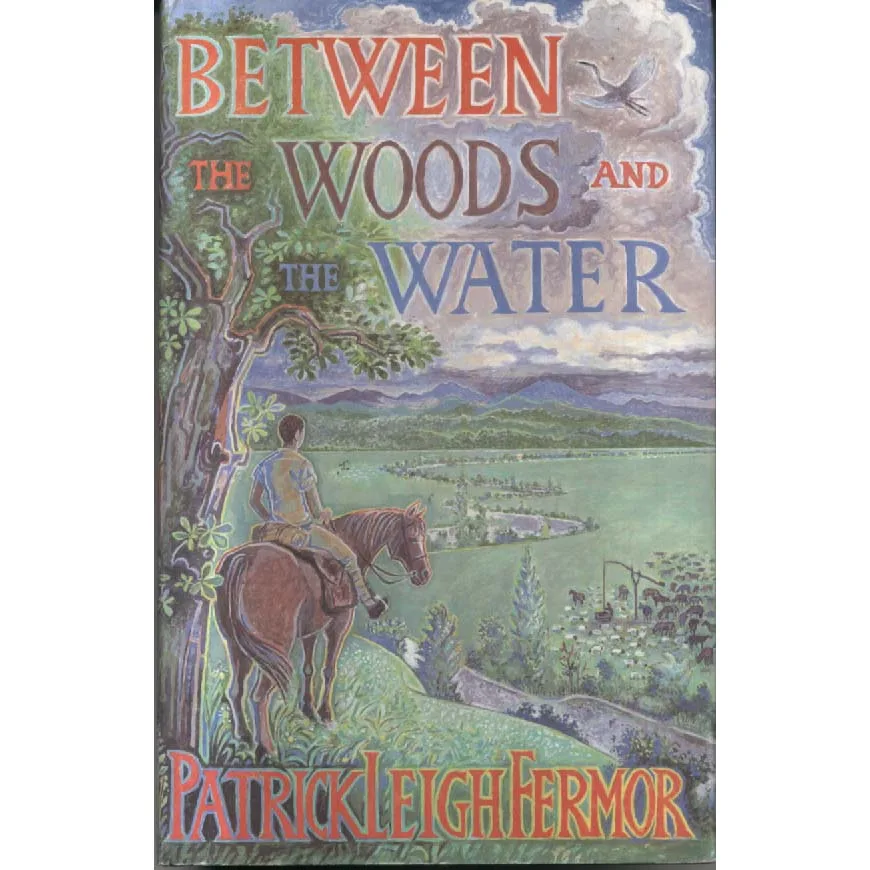
Publisher: John Murray
Format: Hardback
ISBN: 9780719542640
Between the Woods and the Water (1986) is Patrick Leigh Fermor doing the thing Patrick Leigh Fermor does better than almost anyone else: walking through Europe and somehow making every mile sound like a civilisational event. Lesser travellers go abroad, become tired, and complain about the food. Leigh Fermor crosses borders, notices monasteries, aristocrats, landscapes, languages, ruins, weather, customs, horses, wine, heraldry, church towers, and the general atmosphere of history itself, all before breakfast.
This is, of course, the middle volume of one of the great travel narratives, which means it has the enviable task of being neither the beginning nor the end but that rich, confident central stretch where the traveller is fully underway and the reader is completely trapped in his company. And what company it is. Patrick Leigh Fermor does not merely describe places; he arrives at them carrying the entire cultural baggage of Europe in his head, then lays it all out for your benefit in prose so elegant it can make your own holiday notes look like a police statement.
The title alone is marvellous: Between the Woods and the Water. It sounds less like a travel book and more like a location in a particularly intelligent dream. You half expect nymphs, cavalry officers, shepherds, and minor princes to drift in and out of the margins, and in a sense they do. Fermor’s Europe is still full of old worlds not quite gone, of great houses, vanished empires, local rituals, long memories, and people who seem to have stepped directly out of history while remaining perfectly capable of offering him lunch.
What makes the book so irresistible is the contrast between the enterprise itself—young man walks a very long way—and the extraordinary richness of the telling. Walking, in most hands, is repetitive. Walking, in Leigh Fermor’s hands, becomes an excuse for scholarship, gossip, ethnography, lyric description, historical meditation, and the occasional reminder that the continent once possessed layers upon layers of culture before the modern world arrived with motorways, chain coffee, and the universal conviction that every city centre should contain the same five shops.
There is also a faintly comic grandeur to the whole project. A teenage Englishman sets off across Europe with high spirits, robust legs, and an appetite for everything. The result is not merely a travel diary but a kind of rolling act of literary acquisitiveness. Fermor seems determined to absorb an entire continent by sheer observation. Churches? Yes. Castles? Certainly. Linguistic subtleties, local nobility, Byzantine echoes, peasant traditions, and the melancholy afterglow of old Austria-Hungary? Absolutely. Why have one Europe when you can have all of them at once?
Published by John Murray, this sits exactly where it belongs: among those distinguished travel books that make “going for a walk” seem absurdly noble. It is also the sort of book that can inspire two equal and opposite reactions: a desire to abandon modern life and set off with a rucksack at once, and the crushing realisation that even if you did, you would never write about it like this.
Condition: Good. A pleasingly travelled state for a book about travel. It has held up, perhaps with the slightly weathered dignity of someone who has crossed a border on foot and still remembers the correct wine to order afterwards.
A splendid acquisition for lovers of travel writing, European history, old-world atmosphere, and prose of almost unfair beauty. For anyone who has ever suspected that a journey might be more than mere movement from one place to another, Patrick Leigh Fermor is here to prove the point—at length, and gloriously.
Keep browsing: See more Travel books Other books by Patrick Leigh Fermor
